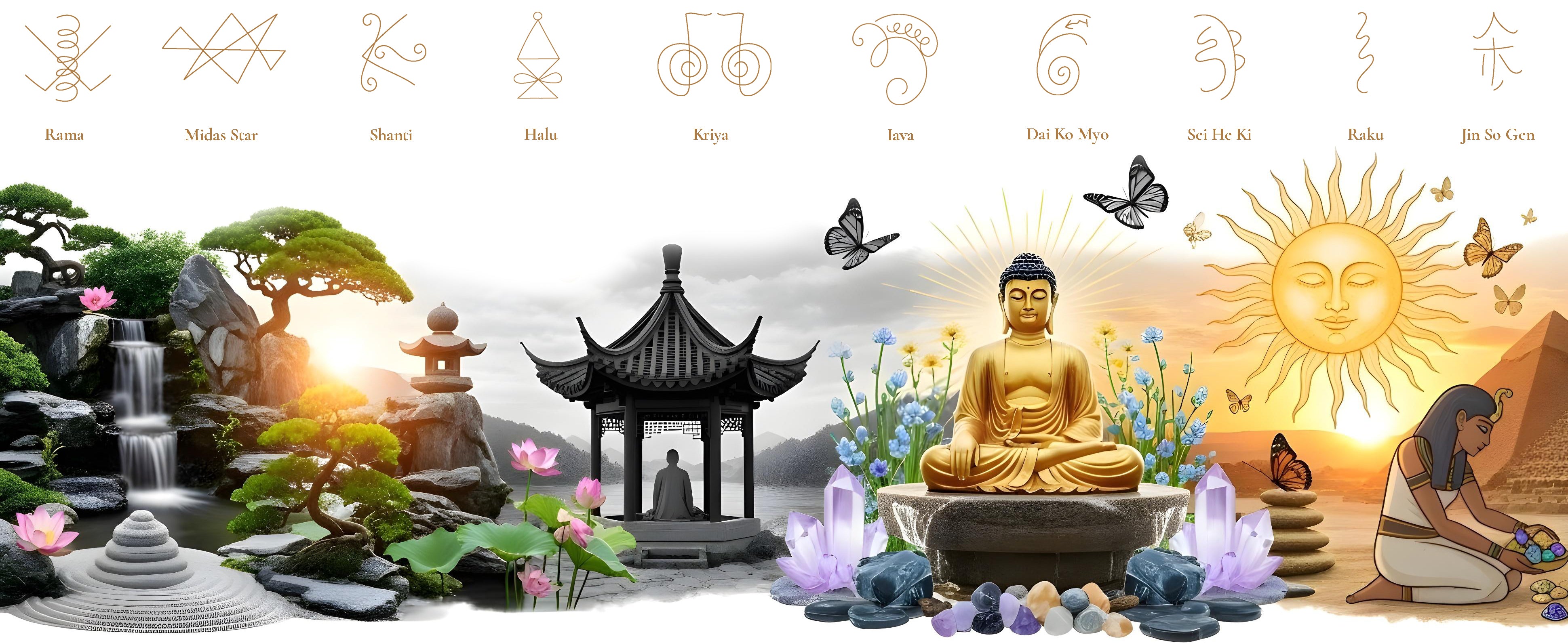
In our interconnected world, diverse cultural ideas often merge, especially within the spiritual realm. Among the practices captivating the Western audience is Feng Shui, an ancient Chinese discipline focused on arranging our surroundings to optimize the flow of energy.

As Christians, we may sometimes encounter dilemmas. Questions arise about whether such philosophies align with our beliefs. It's not uncommon to hear concerns or even strong opposition. Is Feng Shui counter to Christian values, or have we perhaps misunderstood its nature?
To grasp the relationship between Feng Shui and Christianity, it's essential to explore the origins and tenets of this Chinese practice. By examining its historical context and foundational philosophy, we can understand how Feng Shui aligns or differs from various religious perspectives.
This article seeks to address common Christian concerns about Feng Shui, providing clarity and bridging the divide between faith and harmony.
In this article
The Objective of Feng Shui
Feng Shui, a practice with roots in ancient China, aims to cultivate a balanced and harmonious environment. Its primary focus is to enhance the flow of energy, known as chi or qi, fostering opportunities for success and well-being.
At its essence, Feng Shui endeavors to create a positive atmosphere that encourages personal growth and prosperity. By arranging furniture, decor, and other elements in specific configurations, practitioners believe they can affect fortune and attract beneficial energies.
An aspect of Feng Shui involves assessing the layout and design of a space to determine how energy moves through it. Using calculations based on philosophies like the Bagua map or the Five Elements theory, practitioners identify areas that may hinder or enhance the positive flow of energy.
Recently, "body Feng Shui" has emerged, aiming to align the body's energy with the universe through Feng Shui bracelets, seeking to harmonize one's life.
Understanding Feng Shui's objective reveals that it doesn't oppose religious beliefs but rather complements them, offering insights on arranging one's surroundings for optimal energy flow. It's essential to recognize that Feng Shui isn't a religion but a practice deeply embedded in Chinese culture.
For those who follow religious traditions, integrating Feng Shui into their homes or places of worship can serve as an additional tool for cultivating positive energy, helping to create a space that encourages focus, tranquility, and spiritual connection.
Feng Shui and Christianity: Does It Conflict with My Faith?
Some Christians may feel uneasy about practicing Feng Shui. It's vital to approach this topic with openness and respect for personal beliefs. In this section, we'll explore the prevalent myths, concerns, and misconceptions Christians have about the practice and address each:
1. Theological Concerns
The fundamental principles of Feng Shui are rooted in Taoist beliefs about energy flow and the balance of Yin and Yang. Some Christians perceive these concepts as conflicting with Christian theology, viewing them as contrary to a monotheistic worldview.
Addressing theological concerns: While Feng Shui is grounded in Taoist beliefs, it's primarily a philosophical system that focuses on harmony with one's environment. It doesn't promote deity worship. Christians can view Feng Shui as a tool for enhancing well-being without embracing Taoist theology.
2. Idolatry Worries
Feng Shui often includes various symbols, idols, and objects like the Bagua mirror, wind chimes, and specific statues. Some Christians worry that using these items might be akin to practicing idolatry.
Addressing idolatry worries: Using Feng Shui symbols doesn't equate to idol worship. Just as Christians might use decorative crosses or scripture verses in their homes without seeing them as idols, Feng Shui items can be viewed as symbolic, not divine.
3. Fear of the Occult
Some Christians associate Feng Shui with occult or pagan practices, fearing they might inadvertently invite negative spiritual forces into their lives.
Addressing fear of the occult: Feng Shui is about aligning with natural energies. While it involves unseen forces like chi, these are not considered occult or supernatural like magic or witchcraft. Feng Shui is more akin to architecture and environmental psychology than occultism.
4. Dependence on External Powers
Relying on the philosophy of Feng Shui to bring positive changes in one's life can be perceived as placing trust in something other than God. This might concern Christians who are taught to rely solely on God.
Addressing dependence on external powers: Feng Shui can be approached as a technique, not as a faith or spiritual system. It's like how a Christian might rely on medical science for treatment; using Feng Shui doesn't imply a lack of faith in God.
5. Cultural Differences
Western Christianity has a culture and history distinct from the East Asian origins of Feng Shui. This cultural gap can lead to misunderstandings and apprehension.
Addressing cultural differences: Just as Christianity is practiced in diverse cultures worldwide, Feng Shui can be understood and applied within various cultural contexts. Embracing an element of another culture doesn't mean rejecting one's own.
6. Over-commercialization
Modern Feng Shui, especially in the West, has often been commercialized and marketed in ways that might seem superficial or materialistic, which can be off-putting for those seeking authentic spiritual practices.
Addressing over-commercialization: While Feng Shui has been commercialized in some contexts, this doesn't negate its genuine principles. Christianity, too, has seen commercialization, such as Christmas, but believers can discern and separate genuine practices from commercial distortions.
7. Syncretism Concerns
Syncretism refers to merging different religious beliefs into one system. Some Christians worry that incorporating Feng Shui practices might dilute or compromise their faith.
Addressing syncretism: Christians can adopt Feng Shui without integrating it with their religious beliefs. Just as one might practice yoga for health without adopting Hindu beliefs, Feng Shui can be applied in a secular or cultural manner without theological implications.
8. Biblical Guidelines
The Bible offers directives on how believers should live, and some Christians might feel that Feng Shui doesn't align with these guidelines.
Addressing biblical guidelines: The Bible provides guidance for living, but it doesn't cover every aspect of life. There's no explicit biblical stance on Feng Shui. The key is ensuring that any practice aligns with one's understanding of biblical teachings.
9. Lack of Familiarity
Often, fear stems from misunderstanding. Many Christians might simply be unfamiliar with Feng Shui's actual concept and goals and base their concerns on misconceptions.
Addressing lack of familiarity: This concern can be addressed through education. By learning about Feng Shui from credible sources, Christians can form informed opinions and discern whether and how they might incorporate it into their lives.
10. Social and Community Pressure
In some Christian communities, there's pressure to conform to certain standards. Even if an individual is open to Feng Shui, they might refrain from practicing it due to concerns about community perception.
Addressing social and community pressure: This is a challenge in many contexts, not just with Feng Shui. It's essential for individuals to study, pray, and discern for themselves while seeking wise counsel when needed. Each person must choose practices aligning with their convictions, even if it means going against their community's grain.
Is Feng Shui a Religion? Debunking Myths
Contrary to common belief, Feng Shui is not a religious practice. It is a system based on ancient Chinese philosophy of energy flow and spatial arrangement. While some cultural and spiritual elements may be associated with Feng Shui, it doesn't require adherence to any specific religious beliefs.
Not Tied to Religion
Feng Shui is often misunderstood as being linked to religious practices, but that's not the case. It's important to recognize that Feng Shui is rooted in the concept of qi, referring to the vital energy present in all living things. The goal of Feng Shui is to harmonize this energy within our surroundings for improved well-being. It doesn't involve worship or rituals associated with any particular religion.
Principles of Energy Alignment
At its core, Feng Shui focuses on creating balance and harmony by optimizing the flow of energy in your surroundings. This involves arranging furniture, objects, and spaces to enhance positive vibration while minimizing negative influences. By considering factors like light, color, and placement, Feng Shui aims to create an atmosphere that supports health, happiness, and prosperity.
Cultural and Spiritual Foundations
Although not inherently religious, Feng Shui has cultural and spiritual roots. It draws inspiration from ancient Chinese philosophy and incorporates concepts such as Yin and Yang (the duality of opposing forces) and the Five Elements (wood, fire, earth, metal, water). These elements are believed to influence different aspects of life when properly balanced.
Compatibility with Faiths
One advantage of Feng Shui is its compatibility with various religious beliefs. Since it doesn't require specific religious practices or contradict any faiths directly, individuals can incorporate it into their lives without compromising their religious convictions. That means Feng Shui and Christianity can coexist.
How Feng Shui Enhances Spiritual Well-being
Feng Shui isn't just about rearranging objects, decorating your space, or wearing symbolic jewelry. It can positively impact your spiritual well-being. By aligning physical spaces and your body's energy field with positive vibrations, Feng Shui creates an environment that promotes inner peace and supports spiritual practices.
Creating a Peaceful Environment
Incorporating Feng Shui into your surroundings creates a harmonious space that fosters tranquility. This is particularly beneficial for individuals seeking to enhance their spiritual well-being. By arranging objects or wearing feng shui bracelets in a way that allows the flow and attraction of positive chi, you can create a space that feels balanced and peaceful.
Supporting Meditation and Mindfulness
Feng Shui can support meditation and mindfulness practices. When your surroundings are organized and free from clutter, it becomes easier to focus and quiet the mind. A serene environment helps create the right atmosphere for deepening your connection with yourself and the divine. Whether through dedicated meditation spaces or simply creating a calm atmosphere in your home, Feng Shui can enhance your ability to engage in spiritual practices.
Promoting Tranquility and Connection
By incorporating Feng Shui principles into your living space, you invite positive energy into every aspect of your life, including spirituality. The alignment of Yin and Yang energies within the surroundings promotes balance, essential for overall well-being. When you feel at peace in your surroundings, it becomes easier to connect with higher powers or engage in religious rituals.
Balancing Feng Shui with Beliefs
In conclusion, Feng Shui and Christianity can coexist harmoniously.
Feng Shui is not a religious practice but a system that seeks to enhance the flow of positive energy in our surroundings. It can complement and support your existing beliefs and practices, rather than conflict with them.
By understanding the goals and philosophy of Feng Shui, you can incorporate its practices into your life while staying true to your religious convictions.
Remember, it's about creating harmony and balance in your surroundings, which aligns with many spiritual teachings across different faiths. Feel free to explore how Feng Shui can enhance your spiritual well-being without any conflicts or compromises.
FAQs
Can I practice Feng Shui if I follow a specific religion?
Absolutely! Feng Shui is not tied to any particular religion and can be practiced by individuals from various faith backgrounds. It focuses on creating harmony and balance in one's surroundings, which can complement your religious beliefs rather than interfere with them.
Will practicing Feng Shui go against my Christian values?
No, practicing Feng Shui does not go against Christian values. While some aspects of Chinese culture may have religious connotations, implementing basic Feng Shui concepts like decluttering, organizing spaces, and harmonizing colors can be seen as enhancing the overall well-being of individuals regardless of their religious beliefs.
Can a Christian wear a Feng Shui Bracelet?
Yes, a Christian can wear a Feng Shui bracelet. Wearing a Feng Shui bracelet is a personal choice and does not necessarily conflict with Christian beliefs. As long as a Christian does not place their faith or trust in the bracelet as a source of spiritual guidance or salvation, there is no inherent conflict with wearing it. Ultimately, it is up to the individual's personal beliefs and convictions.
Is Feng Shui against Catholicism?
No, Feng Shui is not against Catholicism. Feng Shui is a traditional Chinese concept that focuses on harmonizing energy in a space to promote well-being and balance. It is not a religious belief or doctrine, but rather a set of guidelines for arranging furniture and decor in a way that is aesthetically pleasing and promotes positive flow of energy. While Feng Shui may have some spiritual or cultural associations, it does not conflict with the teachings or beliefs of Catholicism.
Is there a conflict between Islam and Feng Shui?
Feng Shui is primarily concerned with optimizing flow of energy in physical spaces and does not contradict Islamic teachings. Muslims who wish to incorporate elements of Feng Shui into their homes or workplaces can do so by focusing on aesthetic enhancements that promote tranquility while adhering to Islamic principles.
What are the dangers of Feng Shui?
Feng Shui itself does not pose any inherent dangers. However, there are a few potential risks or misconceptions associated with it. One danger is the belief that Feng Shui can solve all problems and bring instant wealth or success. This can lead to unrealistic expectations and disappointment if desired outcomes are not achieved.
ALSO READ: Is the Feng Shui Bracelet Evil?
Can I still practice my own rituals while incorporating Feng Shui?
Yes! The beauty of incorporating Feng Shui into your life is that it can be seamlessly integrated with your existing rituals and practices. Feng Shui principles can enhance the positive vibration of your surroundings, allowing you to create a harmonious place where you can continue to practice your own rituals.
Is Feng Shui only for spiritual purposes?
While Feng Shui has spiritual aspects, it is not exclusively for spiritual purposes. It is a holistic system that aims to improve various aspects of life, including relationships, health, and success. Whether you are seeking spiritual well-being or simply looking to create a more harmonious living space, Feng Shui can benefit you.